About me
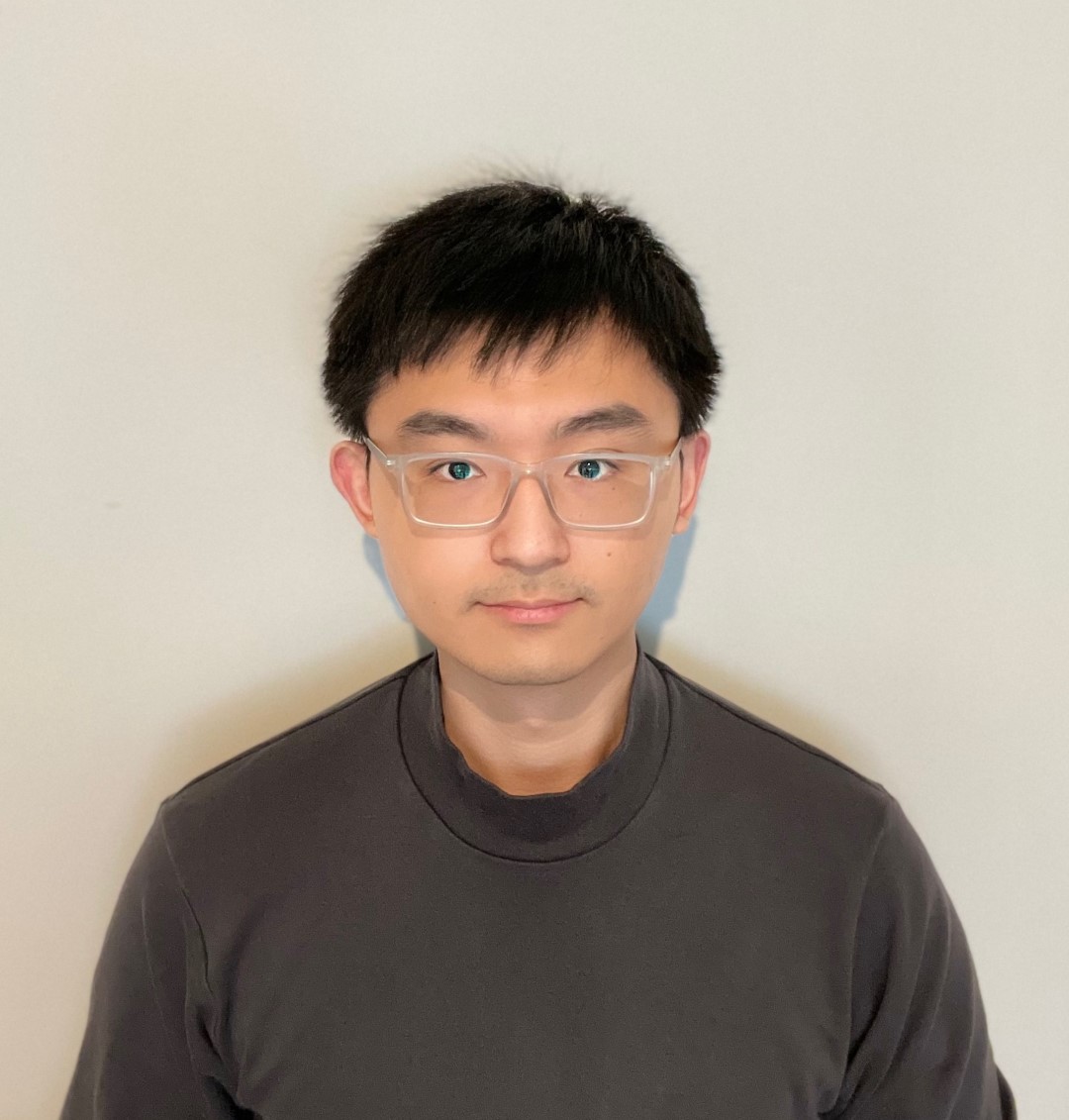
Welcome to Yuxiang Peng’s homepage.
Bio
I am an Assistant Professor in the Department of Computer Science at Purdue University. My research focuses on theoretical and practical explorations of high-assurance software toolchains for quantum computing, including programming languages, compilers, and systems. My research goal is to advance the frontier of and help common users harness the power of modern quantum computers and other emerging computing instruments in various domain problems, such as optimization.
I am actively looking for self-motivated students interested in my research directions.
I obtained my Ph.D. at the Department of Computer Science, University of Maryland, College Park in Spring 2024. I was also affiliated with the Joint Center for Quantum Information and Computer Science. I was advised by Prof. Xiaodi Wu. In 2019, I received a Bachelor of Engineering from the Institute for Interdisciplinary Information Science, Tsinghua University, and a Bachelor of Science (double major) from the Department of Mathematical Science, Tsinghua University. In 2022, I received a Master of Science from the Department of Computer Science, University of Maryland, College Park.
Selected Publications
SimuQ: A Framework for Programming Quantum Hamiltonian Simulation with Analog Compilation
Quantum Hamiltonian simulation, which simulates the evolution of quantum systems and probes quantum phenomena, is one of the most promising applications of quantum computing. Recent experimental results suggest that Hamiltonian-oriented analog quantum simulation would be advantageous over circuit-oriented digital quantum simulation in the Noisy Intermediate-Scale Quantum (NISQ) machine era. However, programming analog quantum simulators is much more challenging due to the lack of a unified interface between hardware and software. In this paper, we design and implement SimuQ, the first framework for quantum Hamiltonian simulation that supports Hamiltonian programming and pulse-level compilation to heterogeneous analog quantum simulators. Specifically, in SimuQ, front-end users specify the target quantum system with Hamiltonian Modeling Language, and the Hamiltonian-level programmability of analog quantum simulators is specified through a new abstraction called the abstract analog instruction set (AAIS) and programmed in AAIS Specification Language by hardware providers. Through a solver-based compilation, SimuQ generates executable pulse schedules for real devices to simulate the evolution of desired quantum systems, which is demonstrated on superconducting (IBM), neutral-atom (QuEra), and trapped-ion (IonQ) quantum devices. Moreover, we demonstrate the advantages of exposing the Hamiltonian-level programmability of devices with native operations or interaction-based gates and establish a small benchmark of quantum simulation to evaluate SimuQ’s compiler with the above analog quantum simulators.
In Proceedings of the ACM on Programming Languages, 8 (POPL), 2425-2455, 2024.
A Formally Certified End-to-End Implementation of Shor’s Factorization Algorithm
Quantum computing technology may soon deliver revolutionary improvements in algorithmic performance, but these are only useful if computed answers are correct. While hardware-level decoherence errors have garnered significant attention, a less recognized obstacle to correctness is that of human programming errors – “bugs”. Techniques familiar to most programmers from the classical domain for avoiding, discovering, and diagnosing bugs do not easily transfer, at scale, to the quantum domain because of its unique characteristics. To address this problem, we have been working to adapt formal methods to quantum programming. With such methods, a programmer writes a mathematical specification alongside their program, and semi-automatically proves the program correct with respect to it. The proof’s validity is automatically confirmed – certified – by a “proof assistant”. Formal methods have successfully yielded high-assurance classical software artifacts, and the underlying technology has produced certified proofs of major mathematical theorems. As a demonstration of the feasibility of applying formal methods to quantum programming, we present the first formally certified end-to-end implementation of Shor’s prime factorization algorithm, developed as part of a novel framework for applying the certified approach to general applications. By leveraging our framework, one can significantly reduce the effects of human errors and obtain a high-assurance implementation of large-scale quantum applications in a principled way.
In the Proceedings of the National Academy of Sciences (PNAS) 120 (21) e2218775120, 2023.
Stateful Governance for Concurrent Agentic Systems
AI agents are moving from advisory interfaces into systems that execute consequential operations: issuing refunds, reserving scarce inventory, provisioning cloud resources, and initiating financial transfers. These workflows require governance over effects, not only over model outputs. Existing safeguards often decide whether an action is allowed from the information available when the action is requested. For stateful policies, that request-time view may be incomplete: budgets, inventory, approval status, and risk signals can change before the effect occurs, making an earlier authorization or approval stale.
This paper studies stateful governance for concurrent agentic systems. We identify stale authorization as the core failure mode and define policy-state serializability, a correctness condition requiring committed effects to be explainable as authorized against the policy state immediately before they occur. We present MasuGate, a runtime architecture that keeps policies as reviewable programs while coordinating the state and effects needed to preserve their decisions. In experiments with a PostgreSQL-backed prototype of MasuGate, the system prevents stale authorizations missed by baselines that pass policy state as ordinary request context, preserves delayed approvals while unrelated work proceeds, keeps policy evolution mostly in policy text rather than trusted provider code, and avoids policy violations in a scripted, LLM-free procurement workflow where agent-governance baselines produce stale authorizations over shared budgets and inventory. More broadly, MasuGate suggests a path for integrating stateful governance boundaries into agent frameworks and provider-backed domains where agents act on shared resources.
Manuscript, 2026
Advisees
Post-doc: Peiyi Li
Ph.D.: Yu-Hsuan Wu, Yi Yu, Joel Jurado Diaz (co-advised with Ruizhe Zhang)
Teaching
[Fall 2026] CS 58900 Quantum Computing
[Spring 2026] CS 59200 Quantum Computer Software Stacks
[Fall 2025] CS 59300 Introduction to Quantum Computing (co-taught with Eric Samperton)
News
- [10/2025] An animation film that I participated in, The Shyness of Trees, received a Student Academy Award, bronze medal for animation.